
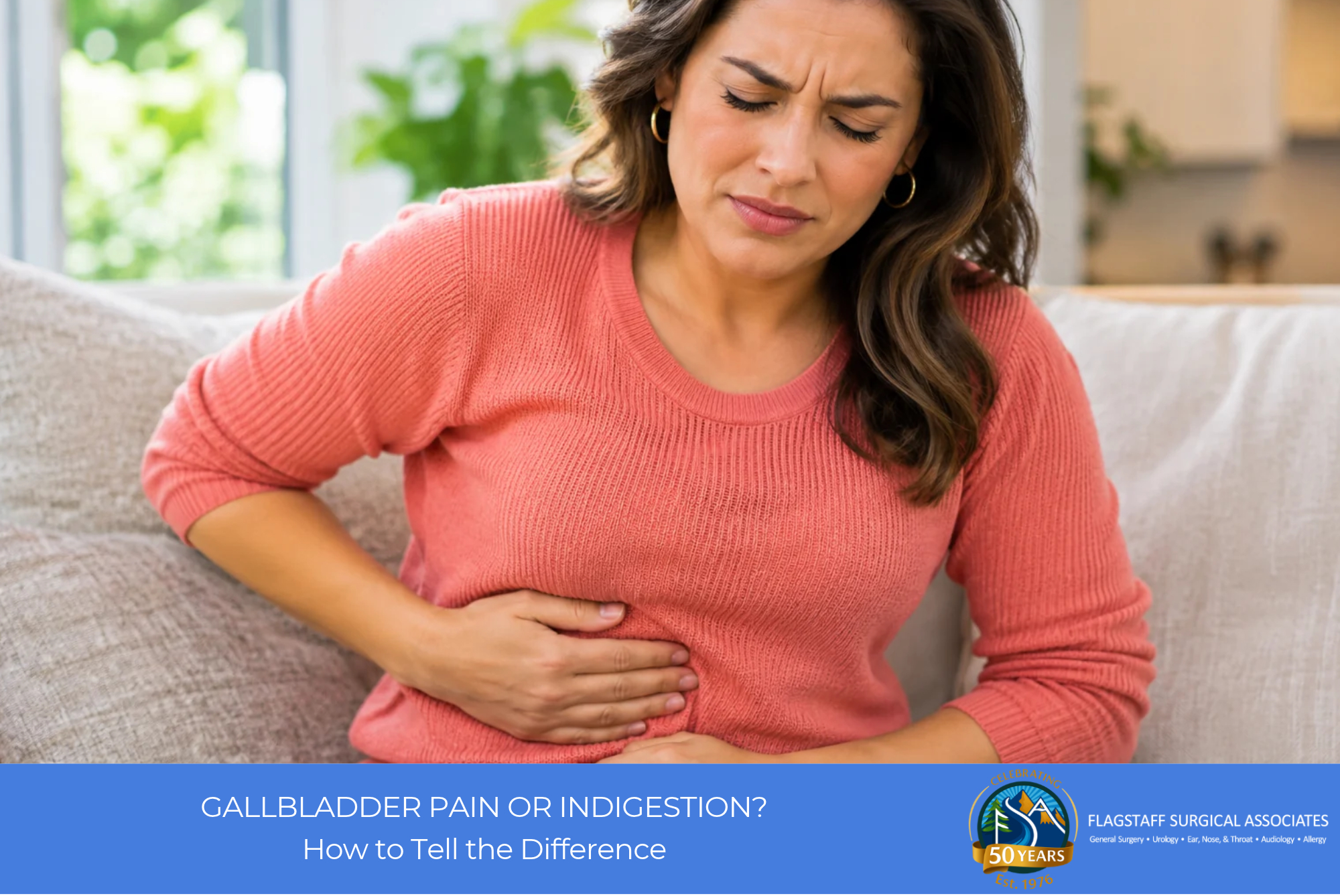
Upper abdominal discomfort after eating is often blamed on indigestion. However, when pain becomes intense, returns repeatedly, or develops in a specific area of the abdomen, the gallbladder may be responsible. Recognizing the difference between common digestive discomfort and gallbladder disease can help patients determine when medical evaluation is necessary.
Gallbladder problems and indigestion can produce overlapping symptoms, but they differ in their underlying causes, typical pain patterns, and treatment approaches.
At Flagstaff Surgical Associates in Flagstaff, Arizona, patients experiencing symptoms of gallbladder disease can seek surgical evaluation to determine whether additional testing or treatment is appropriate.
Understanding the Difference Between Gallbladder Disease and Indigestion
The gallbladder is a small organ beneath the liver that stores bile, a digestive fluid involved in breaking down fats. When gallstones interfere with normal bile drainage, pressure can build inside the gallbladder and trigger pain.
Indigestion, also called dyspepsia, describes upper digestive discomfort rather than one specific disease. It can be associated with functional digestive disorders, medications, ulcers, and other gastrointestinal conditions.
According to the National Institute of Diabetes and Digestive and Kidney Diseases (NIDDK), gallstones can remain asymptomatic or cause significant symptoms when they obstruct bile flow.
What Does Gallbladder Pain Feel Like?
Gallbladder pain typically occurs in the upper right or upper middle abdomen. It may begin suddenly, become steady and intense, and last from approximately 30 minutes to several hours.
Symptoms That Suggest Gallbladder Disease
- Steady pain beneath the right ribs
- Pain extending toward the right shoulder blade or back
- Nausea or vomiting during an attack
- Discomfort following a large or fatty meal
- Repeated episodes with a similar pain pattern
- Pain severe enough to interrupt normal activities
Gallbladder pain does not always occur after eating. Some attacks develop overnight or without an obvious trigger.
What Does Indigestion Feel Like?
Indigestion is more commonly associated with upper abdominal burning, uncomfortable fullness, or bloating.
Common Symptoms of Indigestion
- Burning or discomfort in the upper middle abdomen
- Feeling full after eating a small amount
- Excessive fullness following meals
- Belching and bloating
- Mild nausea
- Discomfort that varies with eating habits
Acid reflux can occur alongside indigestion, but heartburn and dyspepsia are not interchangeable diagnoses.
Gallbladder Pain vs. Indigestion: A Symptom Comparison
| Symptom | Gallbladder Disease | Indigestion |
| Typical location | Upper right or middle abdomen | Upper middle abdomen |
| Pain sensation | Steady, sometimes severe | Burning, pressure, or fullness |
| Duration | Often 30 minutes to several hours | Variable |
| Pain radiating to back | Relatively characteristic | Less common |
| Nausea | Common during attacks | Possible |
| Bloating | Sometimes present | Common |
| Recurring episodes | Common with symptomatic stones | Possible |
These differences are useful clues, but symptoms alone cannot establish a diagnosis.
Can Other Conditions Mimic Gallbladder Pain?
Yes. Several medical conditions can produce similar symptoms.
Gastroesophageal Reflux Disease
GERD can cause burning discomfort behind the breastbone, acid regurgitation, and symptoms after meals.
Peptic Ulcer Disease
Ulcers in the stomach or upper small intestine can cause burning or aching upper abdominal pain.
Pancreatitis
Inflammation of the pancreas can cause severe upper abdominal pain that extends into the back, often accompanied by vomiting.
Heart Conditions
Certain cardiac conditions, including heart attacks, can cause upper abdominal discomfort or nausea rather than typical chest pain.
New, severe upper abdominal pain accompanied by chest pressure, sweating, breathlessness, or fainting requires emergency evaluation.
How Do Doctors Determine the Cause of Upper Abdominal Pain?
A clinician evaluates the location, duration, severity, and timing of symptoms, along with medical history and examination findings.
When gallbladder disease is suspected, abdominal ultrasound is generally the first imaging test. It can identify gallstones and certain signs of inflammation.
Blood tests may assess liver function, infection, or pancreatic involvement. Additional imaging or a HIDA scan may be recommended when initial findings do not explain the symptoms.
If gallstones are found, the clinician must determine whether they are actually responsible for the patient’s discomfort. Not every gallstone discovered during imaging causes symptoms.
When Should Gallbladder Symptoms Be Evaluated?
Recurring upper abdominal pain, particularly when it follows a consistent pattern or interferes with daily activities, warrants medical attention.
Severe or persistent pain, fever, jaundice, or repeated vomiting can indicate complications requiring urgent care.
Patients with confirmed symptomatic gallstones may be referred for surgical evaluation. The decision to recommend gallbladder removal depends on the diagnosis, symptom history, and individual health factors.
Learn more about surgical services at Flagstaff Surgical Associates.
Frequently Asked Questions About Gallbladder Pain and Indigestion
Can gallbladder pain feel like trapped gas?
Yes. Early symptoms can resemble gas or bloating, but gallbladder attacks more often cause sustained pain rather than discomfort relieved by passing gas.
Can indigestion cause pain under the right ribs?
It can cause poorly localized upper abdominal discomfort. Persistent pain concentrated beneath the right ribs should be assessed for gallbladder and other conditions.
Does gallbladder pain always follow fatty foods?
No. Fatty meals can trigger symptoms, but attacks may occur without a clear dietary connection.
Will antacids help gallbladder pain?
Antacids treat acid-related symptoms and do not remove gallstones or correct bile duct obstruction.
Can gallstones be present without causing pain?
Yes. Many gallstones are discovered incidentally and never produce symptoms.
What is the best initial test for suspected gallstones?
Abdominal ultrasound is generally the preferred first imaging study.
Should I see a surgeon for recurring upper abdominal pain?
Begin with an appropriate medical evaluation. If testing confirms symptomatic gallbladder disease, a surgical consultation may be recommended.
Gallbladder Symptom Evaluation in Flagstaff, AZ
Distinguishing indigestion from gallbladder disease requires attention to the pattern of symptoms and appropriate diagnostic testing.
Flagstaff Surgical Associates serves patients in Flagstaff and Northern Arizona who need evaluation for gallbladder-related surgical conditions.
Contact Information
Flagstaff Surgical Associates
77 W Forest Ave, Suite 201
Flagstaff, AZ 86001
Phone: (928) 773-2222
Website: flagstaffsurgical.com
Services: General Surgical Services